With approximately 3.7 million children homeschooled in the U.S. as of 2024, the choice to educate at home is no longer a niche path; it's a purposeful movement toward intentional learning. For many parents, the search for the right homeschool preschool workbooks begins with excitement but often ends in a sea of generic, uninspired options. You want more than just busy work. You seek a foundation that is sturdy, engaging, and clear.
It's natural to feel overwhelmed by choices that seem either too rigid or entirely lacking in guidance. You deserve a curriculum that respects your child's pace while building the essential skills they need for the future. This article will help you discover how to choose intentional, skill-building workbooks that transform preschool homeschooling into a journey of discovery and confidence. We will examine the best ways to ensure kindergarten readiness, develop fine motor strength, and cultivate a joyful, bonded experience that lasts a lifetime.
Key Takeaways
- Learn how purposeful workbooks bridge the gap between play and formal education, establishing a rhythm that is predictable, comforting, and productive.
- Identify the essential features of high-quality homeschool preschool workbooks, focusing on large tracing paths and high-contrast visuals that respect a child's natural development.
- Distinguish between mass-market busy work and intentional resources that prioritize substance, quality, and practical application.
- Build a sustainable learning routine by creating a dedicated nook and choosing consistent times for discovery, practice, and bonding.
What Are Homeschool Preschool Workbooks and Why Do They Matter?
Purposeful learning begins with the right tools. Homeschool preschool workbooks serve as a vital bridge between the freedom of early play and the structured expectations of formal education. They aren't merely stacks of paper; they are curated guides that introduce a child to the joy of concentrated effort. By providing a tangible space for exploration, these workbooks help young learners transition from abstract concepts to concrete skills.
In a home environment, a predictable rhythm provides security. Integrating a workbook into the daily routine creates a sense of stability for both the parent and the child. It signals a shift in the day, moving from high-energy activities to a time of quiet reflection and steady progress. This rhythm is predictable, comforting, and productive. It establishes a "learning anchor" that helps children feel safe as they encounter new challenges.
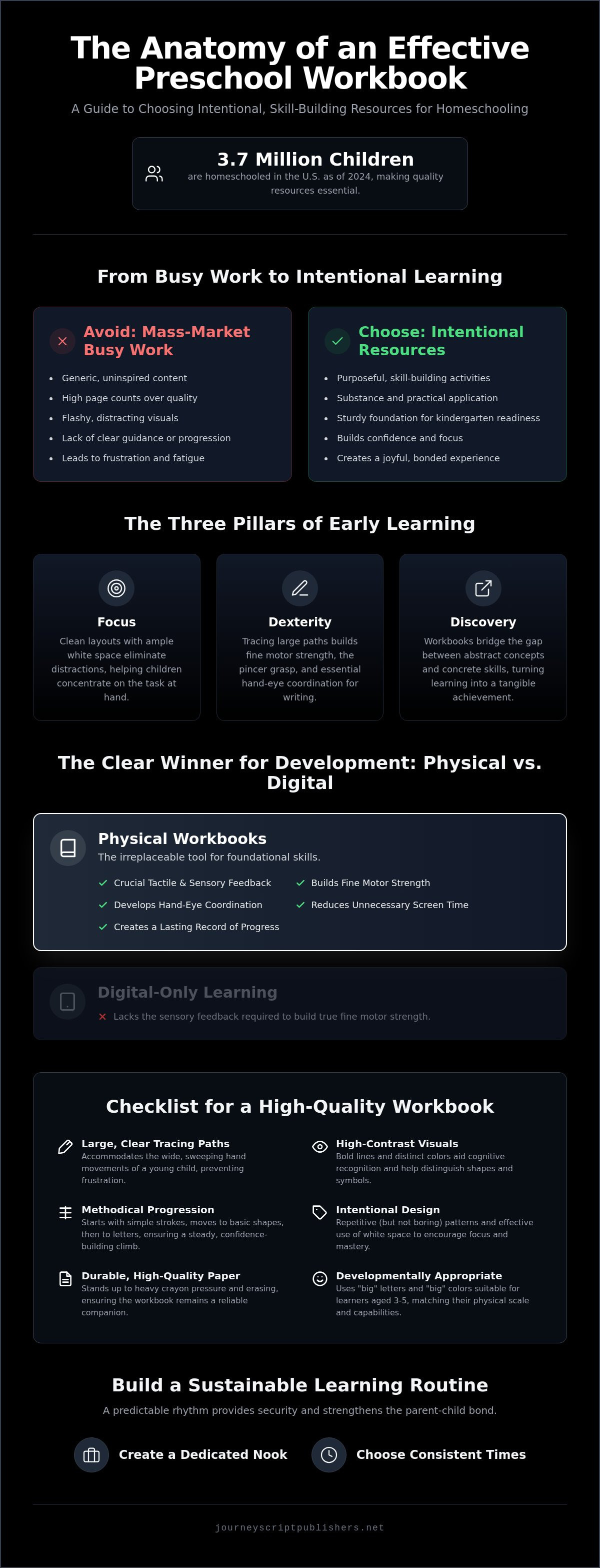
Many mass-market options focus on high page counts and flashy, distracting colors. However, true value lies in the intentionality of the design. A well-crafted page respects the child's developmental stage by offering clear paths for their eyes and hands to follow. This thoughtful approach supports the three pillars of early learning: focus, dexterity, and discovery. When a workbook is designed with purpose, it becomes a mentor rather than just a task.
The Developmental Benefits of Early Structure
Structure provides a framework for confidence. When a child completes a page in their workbook, they experience a genuine sense of accomplishment. This small win builds the stamina needed for future academic success. Various homeschooling methods emphasize the importance of this transition, helping children move from free-play to "learning time" with ease. This shared educational goal also strengthens the parent-child bond. It turns the kitchen table into a space of partnership, patience, and mutual growth.
Workbooks vs. Digital-Only Learning
The tactile experience of paper and crayon is irreplaceable during the most critical developmental years. Digital tools often lack the sensory feedback required to build true fine motor strength. Gripping a tool, feeling the texture of the page, and seeing the physical mark of a crayon helps develop essential hand-eye coordination. Choosing physical homeschool preschool workbooks also helps reduce unnecessary screen time. Unlike a digital app, a physical book creates a lasting record of progress. You can flip back through the pages to see how much your child's lines have straightened and how their confidence has bloomed over time.
Key Features of High-Quality Preschool Workbooks
Selecting effective homeschool preschool workbooks requires a discerning eye for detail. Quality is found in the intersection of clarity, purpose, and progression. Large, clear tracing paths are a primary requirement for any early learner. These paths accommodate the wide, sweeping movements of a child's hand as they learn to control their fine motor skills. High-contrast visuals further support this journey. By using bold lines, distinct colors, and clear paths, a workbook aids in cognitive recognition, helping children distinguish between different shapes and symbols with ease.
Progression must be methodical. It begins with the simplest strokes, moves toward basic shapes, and culminates in the formation of complex letters. This steady climb ensures the learner never feels overwhelmed by the task. Durability is also a practical necessity. High-quality paper stands up to the pressure of a heavy crayon or the friction of a firm eraser. It ensures the workbook remains a sturdy, functional, and reliable companion throughout the learning process.
Fine Motor Skill Development
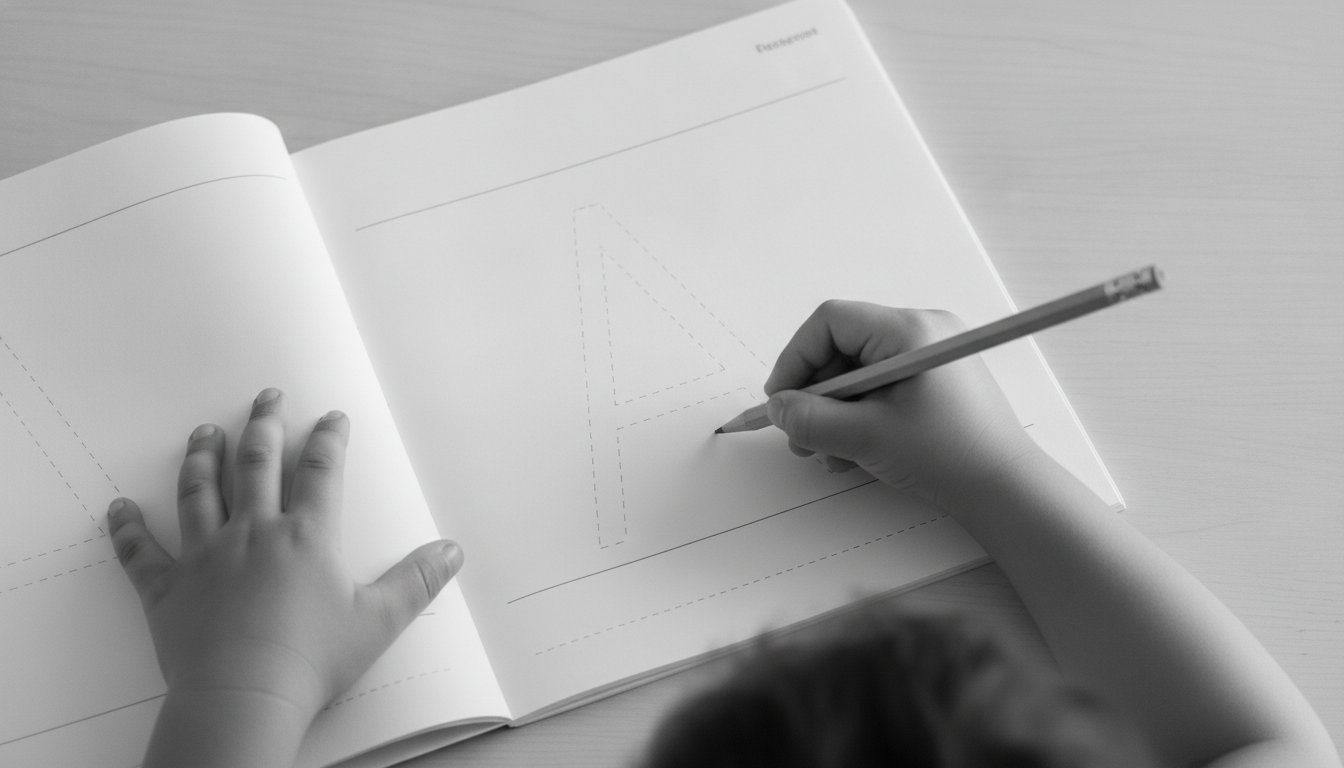
Tracing is the fundamental exercise that builds the pincer grasp. This specific grip is essential for future writing and overall manual dexterity. As a child follows a path, they're strengthening the link between their eyes and their hands. This hand-eye coordination is a key component of cognitive mapping. It allows the brain to translate visual information into physical action. For learners aged three to five, "big" letters and "big" colors are developmentally appropriate. They match the physical scale of a young child's world and respect their current physical capabilities.
Intentional Design and Layout
Visual clutter often leads to frustration and fatigue. High-quality preschool workbooks utilize white space effectively to encourage a sense of calm. When a page is clean, the child can focus entirely on the task. This intentionality helps them stay engaged without feeling overstimulated by unnecessary decorations. Design dictates focus. Practice patterns should be repetitive but never boring. They must offer enough variety to pique curiosity while providing the consistency needed for mastery. If you're seeking a structured approach to these early milestones, you might consider the intentional learning resources developed to support this delicate stage of growth.
Choosing the Right Workbook: Generic vs. Intentional Publishers
The landscape of homeschool preschool workbooks is vast, yet not all resources are created equal. Structure matters. Purpose counts. Quality endures. Many mass-market options prioritize high page counts over meaningful content, resulting in "busy work" that can lead to early burnout. In contrast, intentional publishers focus on the long-term value of each exercise. They treat the workbook as a mentor that guides the child through a deliberate sequence of skills. This distinction is crucial for parents who want to curate a learning experience that is both effective, engaging, and enduring.
When evaluating potential materials, consider the underlying tone of the content. A high-quality resource should feel supportive, guiding, and warm. It shouldn't push a child toward a rigid standard but instead invite them into a journey of discovery. The voice of the publisher should speak with the authority of an expert but the heart of a partner. While many families look for NAEYC's resources on play-based learning to balance their approach, a well-designed workbook acts as a perfect companion to that play. It provides the gentle structure needed to refine the skills discovered during active exploration. This balance ensures that learning feels like a natural extension of a child's curiosity rather than a forced chore.
The Value of an Independent Perspective
Independent publishing houses often operate with a clear sense of mission. Unlike large corporations that may follow fleeting educational trends or focus purely on volume, independent creators emphasize substance, quality, and practical application. This grounded purpose results in a steady, invitational tone that resonates with young learners. A mentor-led approach is far more effective than high-pressure sales tactics. It respects the child's pace, values the learning process, and builds a foundation of trust between the student and the material. This focus on long-term utility ensures the content remains both modern and timeless. It allows parents to avoid the noise of aggressive digital marketing and focus on what truly helps their child grow.
Evaluating Supplemental Materials
A publisher's commitment to your child's growth often extends beyond the physical book. Look for resources that offer Downloadable Bonus Materials to reinforce difficult concepts. These digital extras allow for extended learning without requiring additional purchases or heavy subscriptions. A comprehensive collection of supplemental worksheets is a sign of a publisher who truly understands the ongoing nature of the learning journey. These tools offer several benefits:
- Repetition without boredom: Fresh worksheets allow children to practice the same skill in new ways.
- Flexibility: Parents can print exactly what their child is struggling with when they need it most.
- Depth: Bonus materials often explore concepts from different angles to ensure mastery.
These tools provide the flexibility, variety, and depth needed for a successful homeschool experience. They transform a single book into a complete educational ecosystem that evolves alongside your child's developing abilities. By choosing a publisher that provides these extras, you're investing in a partner for your child's ongoing journey of discovery and improvement.
Integrating Workbooks into Your Peninsula Homeschool Routine
Success in early education often depends on the environment you cultivate. For families in San Mateo or Palo Alto, integrating homeschool preschool workbooks into a busy schedule requires a blend of intention and local inspiration. It's not just about the pages; it's about the rhythm. A consistent routine provides the security a child needs to take risks in their learning. This structure creates a predictable, comforting, and productive flow for the entire household.
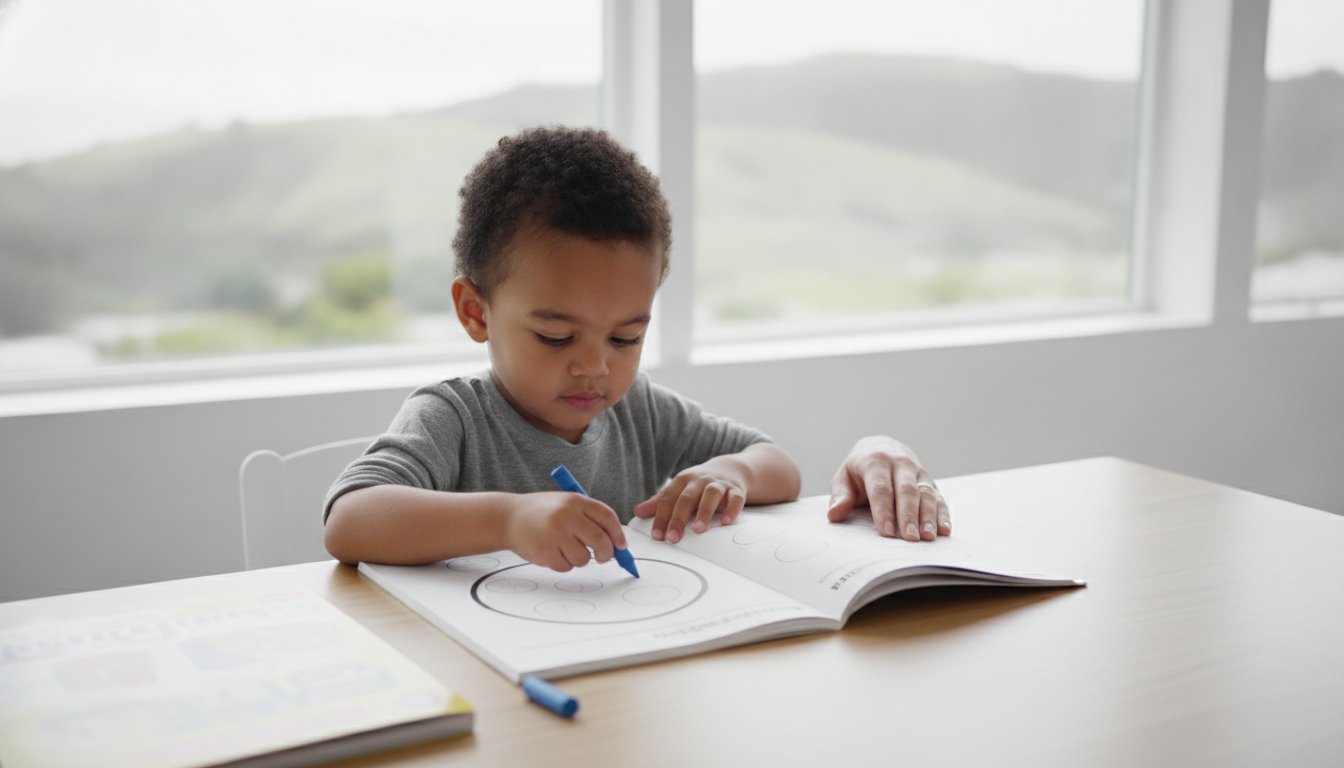
Start by establishing a dedicated "learning nook" in your home. This space doesn't need to be large, but it should be consistent. Whether you prefer the fresh energy of a morning session or the quiet focus of an afternoon block, choose a time that aligns with your child's natural peaks. Pairing this focused time with local outings adds depth to the experience. A morning spent tracing letters can be followed by a visit to a San Bruno library or park to find those same shapes and symbols in the world around them. This connection makes the abstract feel concrete.
To keep the momentum steady, use the tripartite method: Explain, Practice, and Celebrate. First, provide a clear, warm explanation of the task to set the stage. Next, allow the child to practice with your steady, supportive guidance. Finally, celebrate the effort regardless of the technical outcome. This cycle builds confidence, stamina, and joy. It transforms a simple workbook exercise into a shared victory that strengthens your bond.
Setting the Environment for Success
Lighting, seating, and supplies should be tailored to a "Little Hands" friendly scale. Use natural light where possible to keep the space inviting. Ensure the chair allows for a stable posture, as physical comfort directly impacts mental focus. In the bustling energy of Bay Area households, minimizing distractions is vital. Turn off background noise and clear the workspace of unrelated clutter. A calm, supportive atmosphere ensures that your child feels like the center of the journey, rather than just another task on a to-do list.
Balancing Structure and Flexibility
Rigidity can often stifle a child's natural curiosity. While structure is helpful, flexibility is essential for long-term success. Learn to recognize when your child needs to push through a challenging page and when they simply need a break. You can make the material more relatable by incorporating San Francisco Peninsula landmarks into your daily conversations. Mentioning the planes at SFO or the redwoods in the local hills makes learning feel relevant to their daily life. This personalized approach respects your child's unique developmental journey while maintaining a steady pace of progress.
If you are ready to begin this structured yet flexible path, explore the Little Hands collection designed to support Peninsula families in their educational goals.
The Journeyscript Collection: Little Hands, Big Progress
At Journeyscript Publishers, we believe that the tools you choose shape the educational journey. Our San Bruno-based publishing house prioritizes intentionality, quality, and durability. We understand that homeschool preschool workbooks should be more than a collection of tasks; they should be a foundation for lifelong discovery. By focusing on the specific needs of early learners, we create resources that are both modern and timeless. Each book in our collection is crafted to be a reliable partner in your child's ongoing improvement.
Our commitment to your family's success extends beyond the printed page. We recognize that mastery requires repetition, variety, and depth. To support long-term retention, we offer Downloadable Bonus Materials that complement our physical books. These digital supplements provide a vital bridge for extended learning, allowing parents to print additional practice sheets whenever a concept needs more focus. This integrated approach ensures that the learning journey remains steady, consistent, and well-supported.
A Closer Look at Our Handwriting Workbook
Little Hands, Big Letters focuses on foundational handwriting through a deliberate, step-by-step process. This workbook acts as a practical mentor, guiding young learners through tracing paths that build both confidence and letter recognition. Each page is designed for practical application in everyday life, helping children see the connection between their practice and the world around them. The layout is clean, uncluttered, and purposeful. It respects the child's developmental pace while providing the structure needed to master the alphabet with ease and grace.
Color Recognition and Beyond
Cognitive development requires more than just memorization. Little Hands, Big Colors targets cognitive recognition through engaging activities that go beyond simple coloring. This workbook invites children into a journey of true discovery, helping them identify patterns, associations, and logic. These skills are essential as they prepare for the expectations of kindergarten. By focusing on high-contrast visuals and clear instructions, we ensure that every session is productive and joyful. We invite you to join a community of purposeful Peninsula learners who value substance over fleeting trends. Together, we can build a foundation that is sturdy, reliable, and deeply focused on the meaningful impact of the written word.
Cultivating a Lifetime of Curiosity
Building a strong educational foundation is a journey of steady progress, shared discovery, and quiet confidence. By choosing quality over quantity, you ensure that every page your child completes is a step toward genuine mastery. The right homeschool preschool workbooks act as more than just paper; they are mentors that respect your child's pace and developmental needs. Whether you are establishing a new routine on the Peninsula or refining an existing one, the focus should always remain on substance, quality, and practical application.
As an independent San Bruno publisher, we are committed to providing tools that reflect these values. Our approach is defined by intentionality, grounded purpose, and supportive guidance. We believe that learning should be a joyful, bonded experience that extends beyond the physical book through our comprehensive Downloadable Bonus Materials. This combination of physical and digital resources ensures your child has the variety and depth they need to thrive.
Explore our purposeful preschool workbooks at Journeyscript Publishers and begin a journey that transforms early education into a lifetime of discovery. Your child's potential is a path waiting to be walked with care and purpose.
Frequently Asked Questions
What age is best to start using preschool workbooks?
Most children are ready to begin between the ages of three and five. This developmental window allows them to develop the necessary interest, grip strength, and attention span for structured tasks. It's best to look for signs of readiness, such as an interest in holding crayons or a curiosity about letters. Starting during these years helps build a foundation of focus, dexterity, and discovery that serves them well in the future.
How many pages should my child do in a workbook each day?
Completing one to two pages per day is usually sufficient for early learners. The primary goal is to maintain a sense of accomplishment without causing fatigue or frustration for the child. Short, focused sessions are significantly more effective than long, forced periods of study. This approach prioritizes the quality of the work, the depth of the engagement, and the joy of the shared experience at home.
Can workbooks really help with kindergarten readiness?
Yes, intentional homeschool preschool workbooks are specifically designed to bridge the gap between play and formal schooling. They help children master the foundational skills of letter recognition, color identification, and fine motor control. By establishing a predictable rhythm at home, you prepare your child for the structured environment of a future classroom. This preparation builds the confidence, stamina, and curiosity needed for a successful academic transition.
What is the difference between a tracing book and a regular coloring book?
Tracing books provide structured paths designed to build the pincer grasp and hand-eye coordination. While coloring books encourage free-form creativity, tracing is a deliberate exercise in motor control and letter formation. High-quality tracing resources, such as Little Hands, Big Letters, focus on the specific strokes required for future writing. This makes them essential tools for developing precision, patience, and practical skill during the most critical developmental years.
How do I keep my preschooler engaged with their workbook?
Engagement is best maintained through consistency, encouragement, and short sessions. Setting a regular time for practice helps the child know what to expect, which creates a sense of security and rhythm. Pairing workbook time with a dedicated "learning nook" or a special set of supplies can also make the experience feel significant. Always remember to explain the task, practice together, and celebrate every small victory along the way.
Are there digital supplements available for Journeyscript workbooks?
Yes, we offer Downloadable Bonus Materials to support long-term retention and extended practice for our series. These digital extras allow you to print additional worksheets as needed, ensuring your child has ample opportunity to master difficult concepts. These materials are designed to complement our physical books by providing variety, flexibility, and depth. They ensure the learning journey remains steady, reliable, and well-supported throughout the entire year.
How do I choose between a generic workbook and an independent publisher?
Look for a publisher that prioritizes intentionality, quality, and a mentor-led voice. Generic workbooks often focus on high page counts and "busy work" that can lead to early burnout. Independent houses like Journeyscript focus on substance over trends, providing curated content that respects the child's developmental stage. Choosing an independent publisher ensures you receive a resource that is thoughtful, durable, and deeply focused on meaningful progress rather than fleeting digital trends.
Can I use these workbooks if we are not a full-time homeschooling family?
Absolutely, these homeschool preschool workbooks are excellent for any family seeking to enrich their child's early education. They function perfectly as a supplement to traditional preschool or as a weekend activity to strengthen fine motor skills. The goal is to provide a structured yet warm environment for learning, regardless of your primary schooling choice. They offer a reliable, steady, and purposeful way to support your child's ongoing growth and discovery.