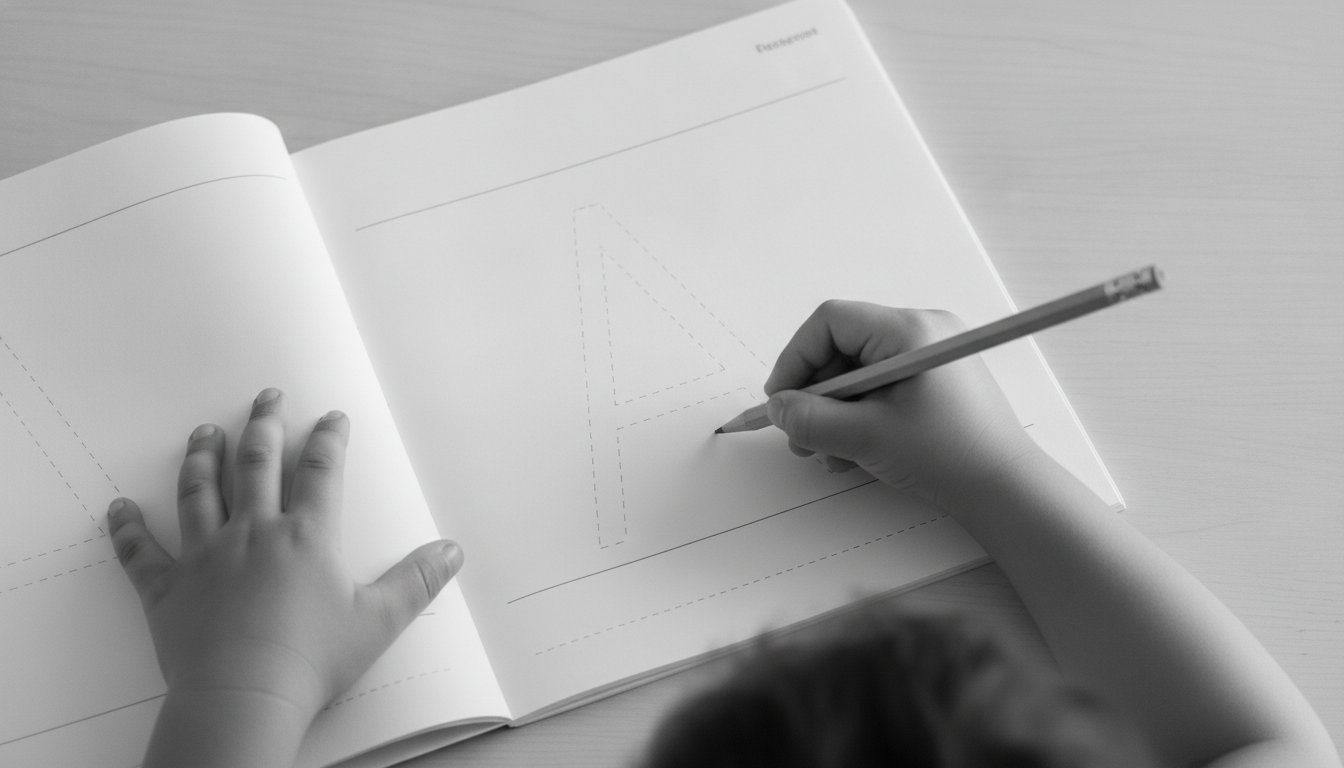
What if the most impactful tool for your child's literacy isn't a high-tech screen, but a deliberate path of ink and paper? Selecting a letter tracing workbook preschool students will actually enjoy is about more than just keeping little hands busy. It's about building muscle memory, fostering focus, and establishing a foundation for clear communication. You want your child to succeed, yet the sea of generic, colorful options often feels overwhelming. It's common to worry that a child will lose interest or, worse, develop incorrect stroke habits that are difficult to unlearn later.
We understand that you're looking for substance over fleeting trends. You deserve a resource that offers quality, durability, and practical application. This guide will show you how to select a workbook that prioritizes intentional learning over repetitive motion. You'll discover how the right choice can improve pencil control, boost letter recognition confidence, and create a stable daily routine. We will examine the essential features of effective workbooks, the cognitive benefits of handwriting, and the simple ways you can mentor your child through their first written words.
Key Takeaways
- Understand how handwriting acts as a multisensory bridge, strengthening cognitive development, fine motor control, and creative expression.
- Learn to prioritize the science of muscle memory and correct stroke order to build a stable foundation for legible, confident writing.
- Identify the physical hallmarks of a quality letter tracing workbook preschool learners need, focusing on durable paper, intentional design, and clear layouts.
- Implement the "10-minute rule" to establish a predictable, supportive, and effective daily learning routine at home.
- Transition into the role of a practical mentor who guides with warmth, patience, and intentionality to foster a lifelong love for learning.
Why Letter Tracing Remains Essential for Preschool Development
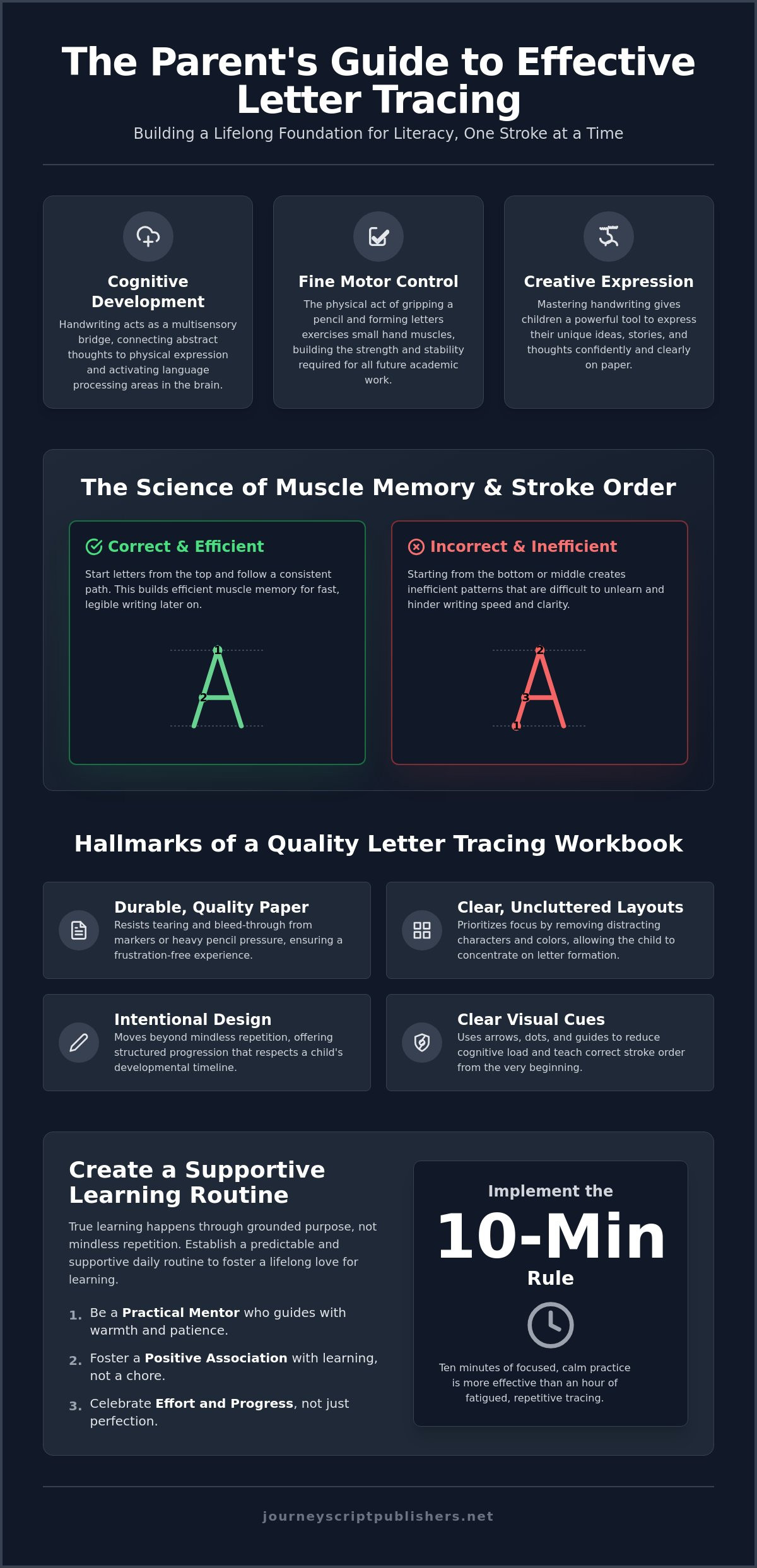
Every stroke a child makes in a letter tracing workbook preschool students find engaging is a building block for their future. It isn't merely a quiet activity to fill time. Handwriting serves as a multisensory bridge that connects abstract thoughts to physical expression. While digital interfaces are common, they lack the tactile resistance necessary to develop deep cognitive pathways. The physical act of writing engages the mind, body, and senses in a unified effort that establishes a permanent foundation for literacy.
This link between fine motor skills and brain development is well-documented. When a child grips a pencil, they're exercising the small muscles in their hands while simultaneously activating areas of the brain responsible for language processing. For parents in San Bruno and throughout the Bay Area, this preparation is a key component of kindergarten readiness. By prioritizing physical workbooks, you ensure your child receives the sensory feedback needed to master the unique flow of every character. It's a grounded way to start their educational journey.
The Developmental Milestones of Early Writing
Writing begins long before the first legible word appears. It starts with broad, energetic scribbles and slowly transitions into intentional line formation. During this phase, developing a stable pincer grasp is essential for long-term control and comfort. Mastering Handwriting mechanics requires patience and tactile repetition. As children trace, they aren't just copying shapes; they're learning to distinguish the subtle differences between letters, which is a critical precursor to reading. This stage is about building the strength and stability required for all future academic work.
Intentionality vs. Repetition in Learning
We believe that true learning happens through grounded purpose rather than mindless repetition. Ten minutes of focused, calm practice is significantly more effective than an hour of repetitive tracing that leads to fatigue. This intentional approach builds spatial awareness and helps children understand the boundaries of the page. At Journeyscript Publishers LLC, we focus on substance over fleeting trends. We provide tools that respect a child's developmental timeline, making every moment of practice a meaningful step toward their growth and confidence.
Understanding the Mechanics of Effective Handwriting Practice
Effective practice is a deliberate process. It relies on the science of muscle memory. When a child uses a letter tracing workbook preschool students find intuitive, they aren't just looking at a page. They are training their nervous system to recognize and replicate specific physical patterns. This repetition builds a library of movements that eventually becomes automatic. It is the difference between struggling to draw a line and effortlessly forming a word. This physical encoding is a vital step in early literacy.
Consistent stroke order is the foundation of legibility. If a child learns to start a letter from the bottom or in the middle, they create inefficient patterns that hinder speed and clarity later. Research highlights a strong Handwriting and reading connection, suggesting that the physical act of forming letters correctly supports the brain's ability to decode them during reading. We must prevent bad habits before they start by insisting on the correct sequence of movements. This focus ensures that the hand and mind work in harmony.
A well-designed workbook uses clear visual cues to facilitate this growth. Arrows indicate direction. Dots signify starting points. Lines provide boundaries. These elements offer a structured path that reduces cognitive load, allowing the child to focus on the physical movement itself. It is a transition from large, sweeping motions to smaller, refined movements that require precision and patience. This progression respects the child's developing motor skills and builds confidence through manageable challenges.
The Anatomy of a Letter: Stroke by Stroke
Every character is a combination of basic shapes. We break letters down into vertical lines, horizontal strokes, and curved arcs. This simplification makes the daunting task of writing feel manageable and accessible. Stroke order is the sequence of movements used to form a character. By establishing a consistent starting point for every letter, we ensure the child develops a predictable and reliable writing rhythm that serves them for years to come.
Building Fine Motor Strength Beyond the Page
Handwriting does not exist in a vacuum. It requires hand strength, finger dexterity, and wrist stability. Activities like coloring, clay modeling, and using safety scissors are essential companions to tracing. Our coloring resource, Little Hands, Big Colors, supports these same motor goals by encouraging control within boundaries. If you notice signs of frustration, such as a tight grip or heavy sighing, it is time to take a break. Learning should feel like a steady journey, not a high-pressure race. You can find more resources to support this journey at journeyscriptpublishers.net.
Evaluating the Best Preschool Letter Tracing Workbooks
Choosing a letter tracing workbook preschool students will actually use requires a discerning eye. It is not about the number of pages or the brightness of the cover. It is about the physical and psychological experience of the learner. High-quality paper is a non-negotiable feature. Young writers often apply significant pressure with crayons or pencils, making thick, bleed-resistant paper necessary for a frustration-free experience. If the ink from one page ruins the next, the child's sense of accomplishment is diminished. A physical book provides a sense of permanence that loose sheets cannot match.
Design plays an equally critical role in the learning process. Visual clutter distracts. Many generic workbooks fill every inch of white space with cartoons, which pulls the child's focus away from the letterform. A superior layout prioritizes clean lines and ample room for movement. We also advocate for "Big Letters" in early practice. Large characters allow for the sweeping, gross motor movements that precede refined finger control. This approach respects the developmental timeline, ensuring that handwriting remains essential for preschool development without becoming a source of stress or anxiety.
Physical Workbooks vs. Digital Downloads
A physical book offers an archival value that digital files lack. There is a profound psychological benefit to "finishing" a book, as it provides a tangible record of progress and effort. While a Preschool Letter Tracing Worksheets PDF can be a helpful supplemental tool for extra practice, it shouldn't replace the core experience of a bound volume. For families traveling through San Mateo or commuting across the Bay Area, a durable workbook is a reliable companion. It doesn't require a battery, and it won't break if dropped, making it a steady partner in the daily learning routine.
What to Look for in a Quality Workbook
A parent acts as a practical mentor, and the workbook should support that role. Look for clear instructions that you can easily mirror and explain to your child. Themes should be engaging but grounded, using evocative imagery that resonates without being over-stimulating. When evaluating your options, remember these three pillars of a quality resource:
- Clarity: Uncluttered pages that emphasize the letterform and stroke order.
- Durability: Substantial paper that stands up to enthusiastic, heavy-handed use.
- Purpose: A structured path that builds confidence and skill over time.
By focusing on these elements, you ensure the workbook remains a tool for growth rather than a fleeting distraction. This intentional selection process turns a simple activity into a meaningful step toward literacy.
Creating a Supportive Learning Environment at Home
The effectiveness of a letter tracing workbook preschool learners use is deeply tied to the environment surrounding them. A home should be a sanctuary for discovery, a place for growth, and a foundation for future success. This begins with a predictable routine. We suggest the "10-minute rule" for preschool success. This brief, daily commitment ensures that learning remains a joy rather than a chore. It honors the child's developmental pace while building the steady habit of intentional practice.
Within your San Bruno or Redwood City home, setting up a dedicated "learning nook" creates a physical cue for focus. This space doesn't need to be large or elaborate. A simple table, a sturdy chair, and a clear surface are enough to signal that this time is special. As a practical mentor, your presence is the child's most valuable resource. By focusing on positive reinforcement, you help your child associate the act of writing with confidence, capability, and pride.
The Mentor's Role: Supportive Warmth
Guiding a child through their first letters requires a delicate balance of instruction and encouragement. Start by modeling a comfortable pencil grip. Show them how the hand moves with ease across the paper. It's vital to prioritize effort over perfection in these early stages. When you integrate Little Hands, Big Letters into a daily quiet time, you provide a structured yet gentle way to practice. Listen to your child's cues during this time. If they're tired, it's okay to stop; if they're excited, follow their lead. This flexibility builds trust and keeps the process invitational.
Local Resources for Bay Area Parents
Our community offers many ways to enrich your child's educational journey. San Francisco Peninsula libraries are excellent places to find supplemental books that spark curiosity. For those seeking broader connection, homeschooling groups in Oakland and San Jose provide a wealth of shared experience and support. You can also enhance your child's practice with our Downloadable Bonus Materials, which are designed for extra weekend engagement. These tools ensure that learning remains a dynamic and integrated part of your family life.
Choosing Purposeful Tools: The Journeyscript Approach
Intentionality is the heart of our mission. When you select a letter tracing workbook preschool students will use daily, you're choosing more than a collection of pages. You're choosing a partner in your child's developmental journey. At Journeyscript Publishers LLC, we understand that early education requires a grounded purpose. We prioritize substance over fleeting trends, ensuring that every resource we produce offers long-term value for the learner and the mentor alike. Our workbooks are designed to be durable, practical, and deeply focused on the meaningful impact of the written word.
The transition from guided tracing to independent writing is a significant milestone. It marks the moment a child moves from imitation to creation. Little Hands, Big Letters facilitates this shift by providing a structured path that builds confidence through mastery. We believe that by mastering the foundations now, your child will have the tools they need for a lifetime of clear and confident expression. This isn't just about preschool readiness; it's about fostering a lifelong love for learning through quality tools that respect the child's pace and potential.
The Journeyscript Difference
We are an independent publisher rooted in San Bruno community values. Our approach is defined by a commitment to clarity, utility, and long-term value. Unlike mass-market options that focus on volume, we offer a curated selection of titles designed for both personal and professional growth. We avoid loud, hyperbolic language, opting instead for a sincere delivery that emphasizes the utility of our information. Every workbook we create at Journeyscript Publishers LLC is a reflection of our mission to provide grounded, educational resources that stand the test of time.
Starting Your Journey Today
Your child's progress is a journey of discovery. You can enhance the physical book experience by accessing our Downloadable Bonus Materials, which provide additional opportunities for practice and play. Joining a community of intentional parents in the Peninsula allows you to share experiences and find inspiration for your daily routines. We invite you to take the next step in your child's education with resources that prioritize depth and durability. Explore 'Little Hands, Big Letters' at Journeyscript Publishers LLC and discover how intentional tools can transform the way your child learns to write.
Empowering Your Child’s First Steps Toward Literacy
Building a foundation for writing is a journey of patience, precision, and purpose. By choosing a letter tracing workbook preschool students can truly engage with, you are investing in their cognitive growth and fine motor confidence. We have explored how intentional practice, correct stroke order, and a supportive home environment work together to transform a simple exercise into a meaningful developmental milestone. Every line traced is a step toward independent expression and clear communication.
As a San Bruno-based independent publisher, Journeyscript Publishers LLC is committed to resources that honor these early milestones. Our approach focuses on substance, utility, and long-term value; this ensures your child receives the quality they deserve. When you Order 'Little Hands, Big Letters' for your preschooler, you also gain access to Downloadable Bonus Materials designed to enhance their physical workbook experience. We are here to partner with you as you mentor your child through this exciting chapter of discovery. Your dedication today creates a steady path toward a lifelong love for learning.
Frequently Asked Questions
What is the best age to start a letter tracing workbook?
Most children are ready to begin using a workbook between the ages of three and four. At this stage, they've usually developed the hand strength and coordination needed to hold a thick pencil or crayon. It's helpful to look for signs of interest, such as your child attempting to mimic your writing or showing curiosity about the shapes of letters in books.
Should my child learn uppercase or lowercase letters first?
Starting with uppercase letters is generally more effective because they consist of simpler, distinct strokes. These capital forms are easier for young children to distinguish and replicate with their developing motor skills. Once they've gained confidence with these basic shapes, you can introduce lowercase letters. This sequential approach prevents frustration and builds a stable foundation for more complex writing tasks later on.
How can I help a child who struggles with holding a pencil correctly?
You can encourage a proper pincer grasp by providing shorter pencils or specialized triangular grips. These tools naturally guide the fingers into the correct position without constant correction. It's also beneficial to engage in activities like clay modeling or using safety scissors to build hand strength. These playful exercises support the same motor goals required for successful handwriting and make the learning process feel invitational.
Are tracing workbooks better than educational apps for toddlers?
Physical workbooks provide a tactile resistance and sensory feedback that digital screens simply cannot replicate. A 2024 report on EdTech found that handwriting resulted in higher comprehension scores of 89% compared to 76% for digital-only methods. A letter tracing workbook preschool students use helps activate neural networks related to memory and attention. It's a deliberate way to build foundational skills while avoiding the passive consumption of screens.
How many pages of a letter tracing workbook should a preschooler do a day?
Completing one or two pages during a ten-minute session is usually the ideal amount for a preschooler. Quality of movement is far more important than the quantity of pages finished. Short, focused practice prevents burnout and ensures your child remains excited about the activity. This predictable routine helps establish a sense of accomplishment and keeps the learning process grounded in a supportive, stress-free environment.
Where can I find supplemental preschool letter tracing worksheets in San Bruno?
Parents in San Bruno can find excellent supplemental resources at the local public library or through our own digital offerings. We provide Downloadable Bonus Materials that complement our physical books for extra practice during the weekends. These resources are designed to be accessible and supportive for families throughout the Peninsula. It's a practical way to keep the learning journey consistent and engaging within our local community.
What makes 'Little Hands, Big Letters' different from other workbooks?
Little Hands, Big Letters stands out because it's built on a mission of intentional early education. As a San Bruno-based independent publisher, we prioritize substance over fleeting trends. Our letter tracing workbook preschool resource focuses on foundational handwriting with clear layouts that avoid visual clutter. It acts as a steady partner in your child's growth, ensuring every stroke contributes to long-term skill, clarity, and confidence.